

Table of Contents
Key Takeaways
- The global anime figure market alone is valued at roughly $2.15 billion (2024) and projected to reach $2.93 billion by 2032, while the broader animation collectibles market — figures, cards, cels, and merch combined — was estimated around $5.96 billion in 2026.
- Not all collectible categories perform the same. Industry trackers report that roughly 48% of collectors focus on figures and statues, while around 22% concentrate on trading cards — and each category has different value drivers.
- Condition, print run size, and franchise longevity consistently matter more than short-term hype. Analysts covering the space in 2026 note that strong, long-running franchises tend to hold value better than trend-driven releases, and that mint or near-mint condition significantly affects resale price.
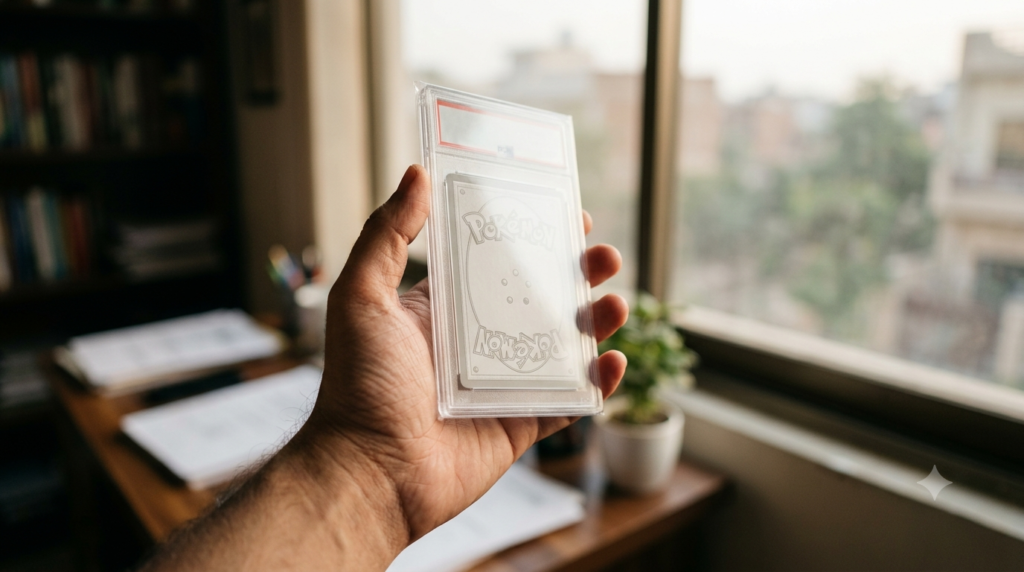
- Grading services (PSA, BGS) can meaningfully change a card’s resale value, but only for items that were rare or well-preserved to begin with — grading a common card doesn’t manufacture scarcity.
- Anime collectibles are not a regulated financial asset class. Treat everything in this guide as informational, not investment advice — collectible markets can be illiquid, trend-driven, and difficult to value precisely.
Why Anime Collectibles Have Become a Real Asset Category
A decade ago, “investing” in anime merchandise would have sounded like a joke — the kind of thing collectors said half-seriously to justify a purchase. That’s changed. Market research firms now track anime and animation collectibles as a distinct, sizable category, separate from general pop culture merchandise, with dedicated CAGR forecasts and buyer-behavior segmentation. One 2026 market report pegs the global animation collectibles market at roughly $5.96 billion, projected to grow to $8.12 billion by 2035 at a modest but steady 3.5% compound annual growth rate.
The trading card side of the market is growing even faster in percentage terms. One industry report values the broader trading card market (which includes but isn’t limited to anime) at around $2.01 billion in 2026, forecast to reach $13.45 billion by 2035 — a 23.49% CAGR — with anime-themed cards specifically recording 29% higher engagement than other categories in recent tracking.
What’s driving this isn’t just nostalgia. It’s a combination of three trends: anime’s mainstream streaming push (making franchises accessible to far larger global audiences than in the DVD-import era), the maturing of adult collectors with real disposable income, and the same grading/authentication infrastructure (PSA, BGS) that transformed sports card collecting into a semi-institutional market spilling over into anime cards and figures.
That said, “growing market” and “safe investment” are not the same thing. This guide walks through what actually holds value, what doesn’t, and how to think about anime collectibles without either dismissing the category or overestimating it.

The Three Main Collectible Categories, and How Their Value Works Differently
Scale Figures and Statues
High-end scale figures — the detailed, often expensive collectibles from manufacturers like Alter, Max Factory, Kotobukiya, and Good Smile Company — behave more like limited-edition art objects than tradeable assets. Value retention tends to track manufacturer reputation, production run size, and character/series popularity more than short-term trend cycles. Entry-level prize figures (Banpresto, Taito) typically run $20–$60, mid-tier figures $60–$150, and high-end scale figures $150 and up — and generally, the categories don’t move up in resale value at the same rate: prize figures are mass-produced and rarely appreciate, while limited-run high-end statues from established manufacturers can hold or exceed original retail price if the character and series remain popular.
Trading Cards
Anime trading cards split into two broad types: franchise-tie-in card games (like the One Piece Card Game) and general collector cards sold in booster packs primarily for chase-card value rather than gameplay. Sealed product — unopened boxes and packs — is generally treated by serious collectors as a long-term speculative hold, not a short-term flip, because its value depends on the game or franchise maintaining relevance for years. For a full breakdown of how this specific category works, see our guide on One Piece Card Investing: Best Sets to Buy in 2026.
Merch, Blind Boxes, and Lifestyle Collectibles
This is the fastest-growing but least predictable category. Blind boxes (surprise-format collectibles) have exploded in popularity for their affordability and impulse-purchase appeal, and limited-edition merch drops — apparel, tech collabs, lifestyle items — increasingly get treated as collectibles in their own right. But this category also has the weakest long-term value data behind it; most of what circulates is retail-price speculation rather than tracked resale performance. We cover this specifically in <mark>Blind Boxes & Anime Collectibles: Hype vs Long-Term Value</mark>.
Data Table: What’s Actually Driving Value in 2026
| Factor | Effect on Value | Category It Matters Most For |
|---|---|---|
| Franchise longevity (Pokémon, One Piece, Disney-tier staying power) | Strong positive — long-running franchises consistently outperform trend-driven ones | Cards, figures |
| Mint / near-mint condition | Significant positive — condition is one of the most consistent value drivers across categories | Cards, figures, sealed merch |
| Low original production run | Positive, but only if demand also exists — scarcity without demand does not create value | Figures, statues |
| Grading (PSA/BGS) | Positive for genuinely rare/high-condition items; negligible for common cards | Cards |
| Hype-driven blind box or trend releases | Weak/negative long-term — short-term price spikes often fade | Blind boxes, trend merch |
| Manufacturer reputation (Alter, Good Smile, Kotobukiya) | Positive — signals quality and limited runs | High-end figures |
| Oversupply from mass reprints | Negative — several categories have shown weaker performance specifically due to oversupply | Cards, mass-market figures |
Sources: industry collectibles market reporting, 2026. See Outbound Authority Links below.

How to Evaluate a Collectible Before Buying “As an Investment”
If you’re buying an anime collectible specifically with resale value in mind (rather than purely for enjoyment — which is a perfectly valid reason to buy something on its own), a few practical checks matter more than hype:
- Check the franchise’s track record, not just its current popularity. A series that’s been culturally relevant for a decade-plus (One Piece, Dragon Ball, Pokémon-adjacent crossovers) has a longer value-retention history than a show that’s trending this season.
- Look at production run size, if disclosed. Manufacturers don’t always publish exact numbers, but “limited edition,” pre-order-only, and convention-exclusive releases are meaningfully scarcer than open, ongoing retail SKUs.
- Factor in grading costs before assuming a card is worth grading. PSA and BGS charge per submission, and grading a common, mass-produced card rarely returns more than the grading fee itself — this only pays off for cards that were already rare or in exceptional condition. Our dedicated guide, Grading Anime Cards & Figures: PSA, BGS, and Resale Impact, walks through this decision in detail.
- Compare figures vs. cards for your specific goals. Figures require significant storage space and are vulnerable to physical damage (dust, sun fading, shipping breakage); cards are more compact and easier to store/authenticate but depend heavily on a thriving secondary market existing for that specific set. See Anime Figures vs Trading Cards: Which Holds Value Better? for a direct comparison.
- Be skeptical of anything marketed explicitly as “the next big investment.” Genuinely valuable collectibles rarely need aggressive investment framing to sell — that language is more common in speculative or hype-driven segments of the market.
Common Mistakes New Collectible Investors Make
- Buying based on current trend popularity rather than franchise durability. Short-term hype (a viral clip, a new season announcement) can spike demand temporarily without translating into long-term resale value.
- Ignoring storage and condition from day one. Figures exposed to sunlight fade; cards handled without sleeves get corner and surface wear that tanks grading potential before you even submit them.
- Assuming all “limited edition” labeling is meaningful. Some “limited” releases have production runs large enough that scarcity claims don’t hold up in practice.
- Overpaying for grading on low-value items. As above — grading fees can exceed the value uplift for common cards.
- Treating collectibles like a liquid financial asset. Unlike stocks, there’s no centralized exchange; selling often means waiting for the right buyer on a marketplace, which can take weeks or months for higher-value items.
- Confusing retail scarcity (sold out at MSRP) with genuine long-term scarcity. Many “sold out” drops get restocked or re-run within a year, which caps resale premiums.
Expert Tips for Building a Collection With Resale Awareness
Experienced collectors in this space generally treat this as a hobby-first, investment-secondary pursuit — which is also the more financially sound framing, since collectibles lack the liquidity and price transparency of formal asset classes. A useful mental model: buy what you’d be happy to own even if its resale value never moves, and treat any appreciation as a bonus rather than the primary goal.
For the figures and statues category specifically, sticking with established manufacturers and iconic, long-running characters has historically outperformed chasing whatever franchise is trending in a given season. For cards, understanding a specific game’s competitive/collector ecosystem — not just its art or IP — tends to separate collectors who make informed decisions from those chasing pack-opening hype. And across every category, documenting condition at time of purchase (photos, original packaging, receipts) makes a meaningful difference if you do decide to sell or grade years down the line.
Where Anime Collectibles Intersect With the Broader Anime Economy
Collectibles don’t exist in a vacuum — they’re downstream of how the anime industry itself makes and licenses money. Merchandising is frequently more profitable for a franchise than the show or film that spawned it; our breakdown of anime merchandising revenue and why toys make more than the show explains why studios and publishers lean so heavily into figures, cards, and merch drops as a primary revenue stream rather than an afterthought.
There’s also a growing overlap with anime’s presence in Web3 — digital collectibles and NFT-based anime projects borrow heavily from the same scarcity-and-provenance logic that drives physical collecting. If that’s an area of interest, see <mark>Are Anime NFTs a Good Investment or Just Hype?</mark> for a look at how the digital side of this market compares.
FAQ
Are anime figures actually a good investment? Some are, most aren’t, in the strict financial sense. High-end, limited-run figures from established manufacturers featuring enduring franchises have historically held or increased in value, but the majority of mass-produced prize figures don’t meaningfully appreciate. Treat figure collecting primarily as a hobby with occasional resale upside, not a reliable investment vehicle.
What anime collectibles hold value the best? Based on current market data, items tied to long-running, globally popular franchises (One Piece, Dragon Ball, Pokémon-adjacent crossovers) in mint condition, with genuinely limited production, tend to hold value best across both the figure and card categories.
Is grading anime cards worth it? Only for cards that are already rare, high-demand, or in exceptional condition. Grading fees can exceed any value increase for common or mass-produced cards, so it’s worth researching a specific card’s baseline market value before submitting it for grading.
How big is the anime collectibles market in 2026? Industry estimates vary by scope, but the broader animation collectibles market (figures, cards, cels, and merch) has been valued at roughly $5.96 billion in 2026 by one market research firm, with the anime figure segment specifically estimated in the low billions and projected to keep growing through the early 2030s.
Should I buy anime collectibles purely for resale, or because I like them? Most experienced collectors and market analysts recommend collecting primarily for enjoyment, treating resale value as a secondary consideration. This is partly practical advice (collectibles markets are illiquid and can be slow to sell) and partly risk management, since chasing pure resale value in a hype-driven market is a common way collectors overpay.
Conclusion
Anime collectibles have grown from a niche fandom expense into a genuine, trackable market category — but that doesn’t make every figure, card, or blind box a smart financial move. The data consistently points to the same drivers of long-term value: franchise durability, condition, genuine scarcity, and manufacturer reputation, while hype-driven trend releases and oversupplied categories tend to underperform. If you’re building a collection with resale potential in mind, treat this guide as a starting framework, dig into the category-specific breakdowns linked throughout, and remember that no collectible — however popular — should be treated as a substitute for a diversified financial plan.
Related reading (cluster articles):
- Anime Figures vs Trading Cards: Which Holds Value Better?
- One Piece Card Investing Guide: Best Sets to Buy in 2026
- Gunpla & Scale Figure Resale Value: What Actually Appreciates
- Grading Anime Cards & Figures: PSA, BGS, and Resale Impact
- Limited-Edition Anime Merch Drops Worth Buying as an Investment
- Blind Boxes & Anime Collectibles: Hype vs Long-Term Value
Cross-cluster reading:
- Anime Merchandising Revenue: Why Toys Make More Than the Show
- Are Anime NFTs a Good Investment or Just Hype?
This article is for informational purposes only and does not constitute financial or investment advice. Collectible values are illiquid, speculative, and can fluctuate significantly based on trends, condition, and market demand.