

Why anime studios go bankrupt even after producing globally successful shows comes down to one structural issue: most studios are paid a fixed production fee by the production committee, not a share of the show’s long-term profit. That fee has to cover staff wages, equipment, subcontracted work, and overhead — and it rarely scales up even when a show becomes a massive hit. Combine that with thin margins, subcontracting costs, and irregular project pipelines, and even a studio behind a beloved franchise can end up financially fragile. This builds directly on the funding structure explained in Anime Production Committee System Explained.
The Core Problem: Fixed Fees, Not Equity
When a studio joins a production committee project, it’s typically hired to animate the show for an agreed budget — not given ownership of the resulting Blu-ray sales, merchandise royalties, or streaming licensing revenue. That means:
- A hit show can generate huge revenue for the publisher, toy company, and streaming partner
- The studio that actually made the show often sees none of that upside beyond its original fee
- If the production fee was calculated tightly (which is common, given competitive bidding for projects), the studio’s profit margin on the project itself may be razor-thin or negative
This dynamic is the flip side of the revenue-sharing structure covered in our pillar guide, How Anime Studios Make Money: The Business of Anime Explained — someone in the committee profits handsomely, but it’s frequently not the animation studio.
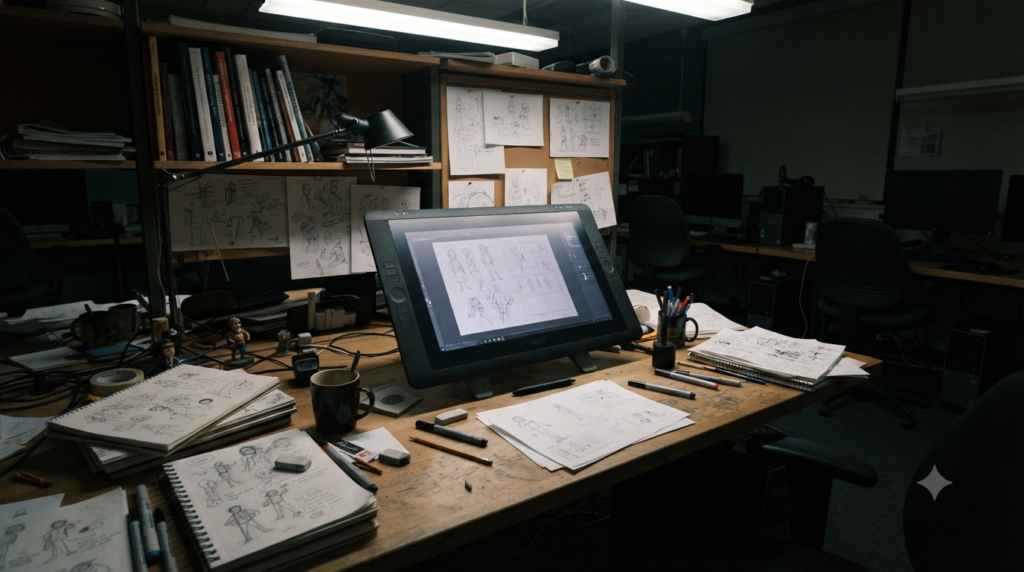
Why Production Fees Stay Low
Japan’s anime industry has an unusually large number of studios competing for a limited pool of committee-funded projects. This creates intense price competition, where studios sometimes accept tight budgets just to keep staff employed between projects. Contributing factors include:
| Factor | Effect on Studio Finances |
|---|---|
| High number of competing studios | Downward pressure on production fee bids |
| Subcontracting to smaller studios/freelancers | Adds coordination cost and quality-control risk |
| Rush schedules for simulcast deadlines | Higher overtime and rework costs |
| Seasonal project gaps | Idle periods with ongoing overhead but no new revenue |
| Rising animator wages/training costs | Squeezes already-thin margins further |
Case Pattern: How a “Successful” Studio Still Struggles
A common pattern looks like this: a studio produces a breakout hit series. Merchandise sells extremely well — a dynamic explored in [Anime Merchandising Revenue: Why Toys Make More Than the Show] — and the toy company and publisher on the committee see strong returns. Meanwhile, the studio’s fee for producing the show was locked in before anyone knew it would become a hit, so its financial outcome doesn’t change even as the franchise becomes a global phenomenon.
If that studio then takes on a follow-up season under similar fixed-fee terms, plus absorbs rising staff costs and rush production schedules, its margins can erode even further — sometimes to the point of real financial distress, despite being publicly associated with a beloved, commercially massive franchise.

Why This Connects to Animator Pay
Because studio margins are already thin, staff compensation is often one of the first places cost pressure lands. Junior animators, in particular, are frequently paid per-cut piecework rates rather than stable salaries, which can result in very low effective hourly pay during demanding production schedules. We cover this specific issue in depth in Why Are Anime Animators Underpaid? The Economics Explained.
Common Misconceptions
“A hit show means the studio is financially secure.” Not necessarily — fixed production fees mean studio finances don’t automatically scale with a show’s popularity or merchandise success.
“Bankruptcy means bad management.” Sometimes, but structural industry economics — thin margins, subcontracting costs, and committee fee structures — are frequently the bigger underlying factor, even for well-run studios.
“Streaming deals fixed the studio profitability problem.” Streaming licensing revenue typically flows to the production committee, not directly to the animation studio, so it doesn’t automatically solve underlying fee-structure issues.
What Studios Are Doing to Adapt
Some studios have responded by:
- Negotiating for equity/investor status within production committees rather than pure fee-for-service work
- Building original IP they fully own, rather than relying solely on committee-funded adaptations
- Diversifying into game development, overseas co-productions, or direct merchandise ventures
- Consolidating with larger media groups for financial stability
These strategies mirror broader industry shifts covered in our streaming-economics piece, Crunchyroll’s Business Model: How Anime Streaming Turns a Profit, where platforms are also moving from pure licensing toward direct investment and ownership stakes.

FAQ
Can a studio go bankrupt even after making a globally popular anime? Yes — production fees are typically fixed regardless of a show’s later commercial success, so studio finances don’t automatically improve with popularity.
Do studios get royalties from merchandise sales? Usually not, unless they specifically negotiated a rights stake as a committee investor rather than a hired production contractor.
Why don’t studios just demand higher fees? Intense competition among studios for limited committee-funded projects makes it difficult to raise fees without losing bids to other studios.
Is this problem unique to smaller studios? No — even well-known, critically respected studios have faced public financial strain, since the fixed-fee structure affects studios broadly, not just smaller ones.
Does this affect voice actor pay too? It’s a related but separate issue — voice actor (seiyuu) compensation follows its own session-fee structure, which we cover in Highest-Paid Anime Voice Actors (Seiyuu) Net Worth Ranked.
Conclusion
Understanding why anime studios go bankrupt despite producing hit shows comes back to the same structural issue at the heart of the whole industry: production committees hold most of the long-term financial upside, while studios are typically paid fixed fees regardless of a show’s eventual success. For the full picture of how money flows through the anime industry, start with our pillar guide, How Anime Studios Make Money: The Business of Anime Explained.
Related reading:
- How Anime Studios Make Money: The Business of Anime Explained
- Anime Production Committee System Explained
- Why Are Anime Animators Underpaid? The Economics Explained
- Anime Merchandising Revenue: Why Toys Make More Than the Show
- Crunchyroll’s Business Model: How Anime Streaming Turns a Profit